The Bibliodiversity Observatory collects studies, analysis, and tools produced by the Alliance, in collaboration with its partners. It is built around issues identified as priorities by independent publishers as a follow-up to the International Conferences of Independent Publishers for the 2015-2021 and 2022-2025 period.
Aimed at professionals and public authorities, the Observatory’s mission includes strengthening bibliodiversity in the various regions of the world.
As an independent, evolving and collaborative space, the Observatory’s role includes :
The International Alliance of independent publishers acknowledges and thanks publishers and their partners (international organisations, Ministries of Culture, unions, etc.…) for their contributions and commitment to the Bibliodiversity Observatory.
About the project :
‘Publishing & Book Culture in Africa’ is a new project headed by Caroline Davis, Associate Professor in Publishing, Department of Information Studies, Centre for Publishing, at University College London. With the support of a British Academy Mid-Career Fellowship – and in association with Beth le Roux, Associate Professor of Publishing Studies at the University of Pretoria in South Africa – the intention is to set up a virtual network bringing together publishing researchers/educators across Africa. The network will serve as a platform of linking researchers, as well as a way of accessing databases of information about publishing in Africa ; and to provide information about ongoing and past projects and open-access publications and research resources, including those generated by current research projects. A responsive and mobile-friendly project website ’Publishing & Book Culture in Africa’ is shortly to be launched.
As part of a wide range of resources to be made available, Hans Zell was commissioned to create the Repository, and which is now freely accessible in a Pilot edition on the Hans Zell web pages for a limited period of time. The final version will be hosted on the Network’s website later in the year.
Pre-print version uploaded on Academia.edu April 2022
Final print/online version to appear in The African Book Publishing Record,
Volume 48, Issue 2, (June 2022) https://www.degruyter.com/view/j/abpr
Discover publishers’ backgrounds, get to know their work and their publications, and listen to the voice of independent publishers… by reading the exclusive publishers portraits in this section !
South Africa : Colleen Higgs ; Bridget Impey ; Thabiso Mahlape ; Monica Seeber ; Annari van der Merwe ; Zukiswa Wanner
Tanzania : Elieshi Lema
Uganda : Goretti Kyomuhendo
Zimbabwe : Jane Morris ; Irene Staunton
This pre-print version uploaded on Academia.edu on 12 October 2020
Final print/online version to appear in The African Book Publishing Record,Volume 47, Issue 1, (March 2021) - https://www.degruyter.com/view/j/abpr
References :
The myth of the ‘book famine’ in African publishing, Review of African Political Economy
DOI : 10.1080/03056244.2020.1792872
Elizabeth le Roux (2020)
Abstract :
The publishing industry in Africa is usually described in terms of ‘booklessness’, ‘hunger’ or ‘famine’. But does this language of scarcity reflect the realities of book production and consumption ? In this paper, the concept of ‘book famine’ is analysed as a central frame of discourse on African books, using a survey of existing documentation. Two ways of responding to book famine – provision and production – are identified, and the shortcomings of book aid (provision) are contrasted with strengthening local publishing industries (production). It is argued that the concept has become a cliché that is no longer relevant and that African publishing, while variable, is responding to local needs.
“Être éditeur au Maroc : la pensée au triple défi du marché, du droit et des libertés” / “To be a publisher in Marocco”
Kenza Sefrioui (En toutes lettres, Marocco)
In Morocco, it is very difficult to be a publisher, due to the conjunction between the lack of economical development of the sector and a long history of hostility of the authorities toward intellectuals, which destructured the fields of knowledge and culture. En toutes lettres’s experience, a young independent publishing house based in Casablanca and specialized in narrative journalism and humanities, proves the need to take the triple challenge of market, law and freedoms, and to invent new forms of solidarity between publishing, press, research and civil society, in order to rebuild a pole of production of critical thinking.
Publishing & the Book in Africa : A Literature Review for 2019
The fifth in a series of annual reviews of select new literature in English that has appeared on the topic of publishing and the book sector in sub-Saharan Africa. Extensively and critically annotated and/or with abstracts, the present list brings together new literature published during the course of 2019, a total of 156 records.
This chronological timeline sets out some of the key dates, events, and landmarks in the history and development of indigenous publishing in Sub-Saharan Africa. It also includes details of the major conferences, meetings or seminars on African publishing, held in Africa or at venues elsewhere, since 1968. An earlier version of this chronology first appeared in The African Publishing Companion : A Resource Guide, and has now been updated through to the period up to 2019, and considerably expanded to also include publication of a number of benchmark studies, conference proceedings, journals, and reference resources on the African book world.
Presentation
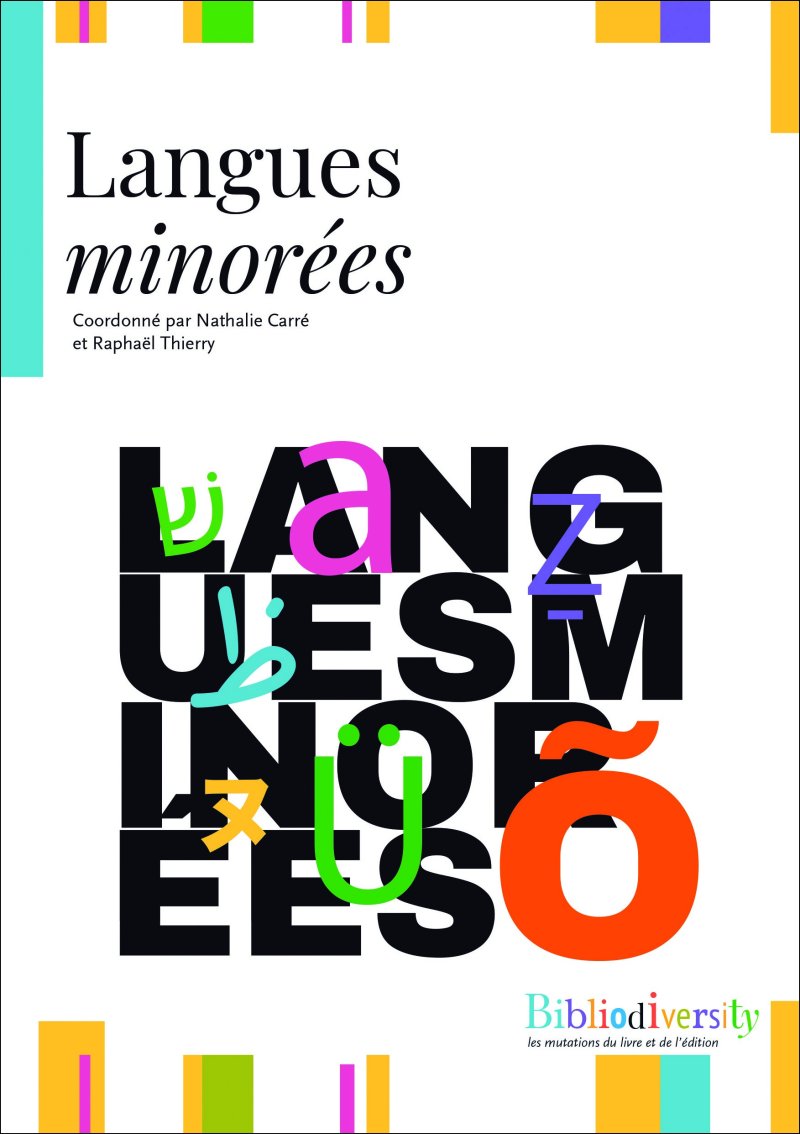
More than half of the languages spoken in the world are in danger of disappearing ; if nothing is done, UNESCO estimates that 90% of languages will have disappeared in the course of this century. Languages are an essential part of a people’s culture, yet they are much more than just a tool for communication ; they offer a unique view of the world and of the people who live in it. What can the publishing sector do – and is already doing – to help preserve and sustain these minority languages ? This book attempts to answer this question through academic articles and testimonies of book professionals who, together, propose a novel approach to the subject.
In the light of their publications, the book analyses the situation of several minority languages - Haitian Creole, Corsican, Innu, Yiddish, Kikuyu, Basque, Malagasy, Náhuatl, etc. and shows that solutions are possible when the actors in the book system are mobilised.
Summary :
Publishing in minority languages – On diversity of publishing languages in a
globalized context / by Nathalie Carré (Inalco, France) and Raphaël Thierry
(independent researcher, France)
Creole publishing in Haiti – Obstacles, initiatives and development prospects /
by Sandie Blaise, Duke University (United States)
The spread of Yiddish poetry in German speaking world – The case of bilingual editions / by Caroline Puaud, Paris Sorbonne University
Write and publish in Madagascar – How to reach the world ? / by Dominique Ranaivoson, University of Lorraine (France)
Make minority languages dialogue (online) – The example of intergenerational collaboration in East Africa / by Pierre Boizette, Paris-Nanterre University (France)
Normativity, diversity and dynamics of creation in the contemporary Basque literary field – Study of its operating trends through the literary trajectory of Eñaut Etxamendi / by Itziar Madina Elguezabal, Bordeaux-Montaigne Doctoral school (France)
Locate, catalog, make visible – The place of minority languages in collections of the University Library for Languages and Civilizations Studies (BULAC) / Interview with Marine Defosse, Soline Lau-Suchet and Nicolas Pitsos, librarians at BULAC (France)
“As long as the language circulates, we will have books to produce” / interview with Bernard Biancarelli (Albiana Publishing, Corsica/France)
“Publishing must grow the world” – Mémoire d’encrier and the languages of the world / interview with Rodney Saint-Éloi, Mémoire d’Encrier Publishing (Quebec / Canada)
“Saving a language is a task for all of us” / by María Yolanda Argüello Mendoza, Magenta editions (Mexico)
Public book and reading policies for indigenous languages in Chile. Intervention (updated in 2020) in the Parliament of Books and Speech / by Paulo Slachevsky, Lom Ediciones (Chile)
Save, transmit – An example of transcription-translation from oral literature
of some Vietnam’s peoples / by Mireille Gansel, translator, writer
PEN’s commitment to Linguistic Rights – The importance of writing, publishing and reading in marginalized languages / interview with Peter McDonald (University of Oxford) and Carles Torner (PEN International), July 2018, Oxford and London
“Co-publishing is a reminder of the extent to which solidarity is the main factor in the successful realisation of any project. It is a symbol of the strength that can be found when several publishers unite together. The book becomes much cheaper, accessible to the maximum number of readers and reaches several countries at the same time.” Lilian Thuram
For more than twenty years, independent publishing houses that are members of the International Alliance of Independent Publishers have collaborated, sharing resources and know-how and developing solidarity co-publishing.
To record and preserve this expertise, the Alliance is going back to the beginnings of solidarity co-publishing and presenting the history of a pioneering collection, “Terres solidaires”, as well as the story of the publication of one of its titles.
With this document, the Alliance also wishes to reaffirm the need for solidarity co-publishing in order to :
• disseminate texts (thereby helping expand the literary ecosystem) ;
• strengthen local book industries ;
• make books more accessible to readers (adapted price).
Thank you very much to Armand Jamme for writing this document and to Mariette Robbes for its graphic design and illustration.
Solidarity co-publishing and translations contribute to the circulation of content and exchange of ideas. Solidarity co-publishing makes it possible for the activities and costs associated with publishing and printing to be shared, which means that books can be made available to wider audiences at a fair price. Solidarity co-publishing partnerships bring structure to the book market in the medium term : distributing texts in often inaccessible areas, reinforcing professional capabilities, developing catalogues, and enabling fair professional and commercial exchanges between the North and South and the development of innovative exchanges and partnerships between countries in the South. Here, independent publishers share their experiences and encourage public authorities to support and assist solidarity publishing partnerships.
“Francophone African books are still very often published by French imprints, which can make them hard to get at home. But there is a growing push for change...
When Cameroonian author Daniel Alain Nsegbe first saw his debut novel for sale in his home city of Douala, the price was so high “you would have to ask someone to stop eating for two days in order to buy the book”. It was around 16,000 CFA francs (£20) ; the average monthly salary in Douala is £150. The book, Ceux qui sortent dans la nuit (Those Who Go Out at Night) was published by Grasset, a French imprint. [...]”
These recommendations are based on the experiences and practices of the International Alliance of independent publishers : they mainly focus on publishing partnerships between publishers from the South, given that support for publishing in these countries is often weak or inexistent, and between publishers of the South and North, given that these exchanges are few.
The “Terres solidaires” collection was created in 2007, to strengthen the circulation of African literature in the Francophone space. Publishing houses that contribute to the collection are based in sub-Saharan Africa and in North Africa. Initially created to republish books written by African writers published in France and make them accessible to an African readership through the solidarity co-publishing process, it is now republishing books originally appearing on African publishers’ lists. Such is the case with Munyal, les larmes de la patience, by Djaïli Amadou Amal, the 13th title of the collection, originally published in 2017 by Proximité publishing, based in Yaoundé, Cameroun.
Publishers select texts and work in close collaboration throughout the editorial process. The principle of a selling price adapted to the buying power of the readership (on average 3 500 FCFA, or 5 Euros) remains one of its pillars.
Auteur(s) : Manuel GIL
Pays de parution : Argentine
Langue(s) :
espagnol
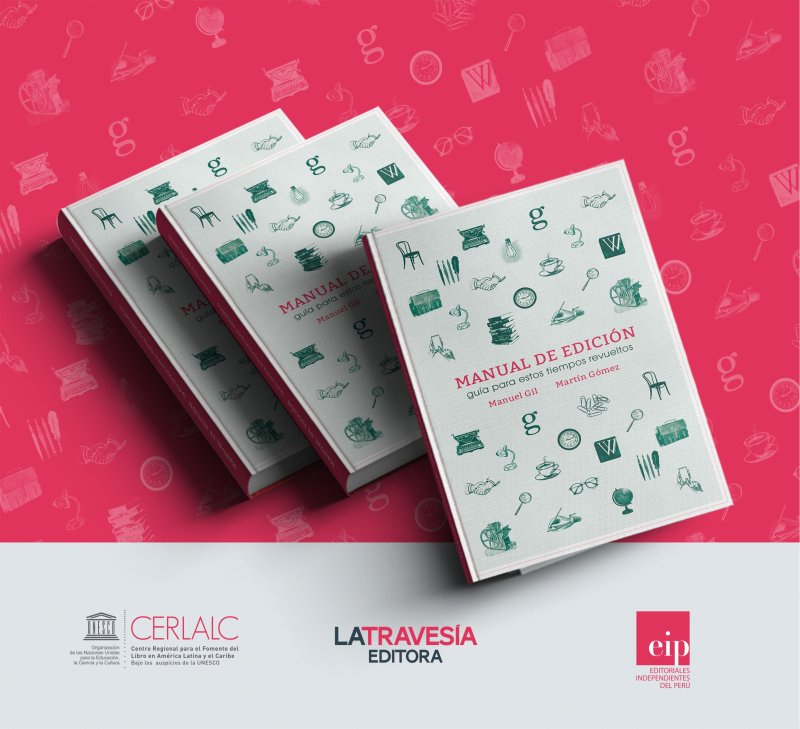
Nouvelle édition publiée en 2017 par la marca editora (Argentine), en coédition avec EDINAR (Argentine) et le CERLALC.
Ouvrage de référence publié initialement par le CERLALC.
Voir également ci-dessous l’édition péruvienne du Manual de edición, éditée par La Travesía Editora, maison d’édition péruvienne, membre du collectif EIP au Pérou.
Feasibility study on the establishment of digital printing structures for independent publishers, by Gilles Colleu (November 2017)
Among the 80 recommendations of the International Assembly of independent publishers (2012-2014), independent publishers called on public authorities and international organisations to “contribute and support the establishment of in-country digital printers and printing facilities, on demand (including in sub-Saharan African) to promote access to books”.
The Alliance thus launched a feasibility study in 2016, on the establishment of digital printing facilities in sub-Saharan Africa and Madagascar. Above all, the aim was to find out whether digital printing is a relevant alternative, and on what conditions. To do so, the study surveys the needs of local professionals, and discusses the potentials and benefits as well as limitations inherent to digital printing, based on realities and practices of Francophone publishers from sub-Saharan Africa and Madagascar. Finally, it discusses the feasibility scenarios for the establishment of a digital printing hub.
By focusing on the technical aspect of digital printing as well as on the development potential in a Francophone African context, this study goes beyond a feasibility study and proposes reflection points on the economic and strategic models of independent publishing.
Gilles COLLEU, author of the study
Former lecturer at the University Institute of Technology « Book Trade » in Aix-en-Provence, former Director of production and digital publishing for Actes Sud, Gilles Colleu established and manages, with Jutta Hepke, Vents d’ailleurs (La Roque d’Anthéron, France), member of the International Alliance of independent publishers. He co manages the digital printing hub Yenooa and incubator Rue des éditeurs and actively participates in the Digital Lab of the Alliance (tutorials, training).
The label “Fair Trade Book” is attributed by the International Alliance of independent publishers to works published in the context of international publishing agreements that respect each other’s particularities : fair co- publishing. These fair copublishings enable the sharing of costs linked to intellectual and physical production of books and therefore ensure an economy of scale ; an exchange of professional know-how and a common experience, while respecting the publishers’ cultural contexts and identities ; and a distribution of works on a broader scale by adjusting prices for each geographic zone.
Over the past few years, the predation of large companies from the North on the book trade in Africa has undergone some partnership-related changes. An evolution of practices is observable amongst the large publishing companies from the North, who do not solely rely on local publishing houses’ acquisitions, but also on establishing partnerships with local publishers. How can we guarantee that these partnerships are balanced and fair ? How can we ensure that publishers from the South do not “sell their souls” through collaborations with large companies from the North ? To accompany these changes, the Alliance has drafted a handbook of practical guidelines for its members, which serves as a reminder on essential checkpoints to look out for.
Should you have comments, please do not hesitate to contact us.
The ecology of the book is concerned with ideas and professional practices towards a sustainable, decolonial and geopolitical ecology of the book, involving all the actors of the world of books and taking into account their interdependence.
These ideas and practices seek to articulate several dimensions and include all the actors involved in the production of books, from creation, layout and publication to reading, including printing, distribution and sale in bookshops.
In addition to these material dimensions linked to the production of books (inputs, choice of paper, transport from the printing press), there are symbolic dimensions, which reflect on the use of books and bibliodiversity. Finally, book ecology also takes into consideration the external factors impacting on the book industry and the book market, in particular the social and environmental dynamics informing a sustainable ecological perspective.
Book ecology is therefore a concept that refers to a complex, collective and interprofessional understanding of all the practices linked to the production of books. It seeks to foster dialogue between professionals to bring about structural and thoughtful changes for greater eco-responsibility and bibliodiversity.
In 2024, the International Alliance of Independent Publishers, thanks to the support of Open Society Foundation, extends this project to the Arab world for a better understanding of public authorities’ commitment to books and reading in the different countries of the Arab world. To this end, data is collected in 10 countries based on a common questionnaire. The data will then be presented on the dedicated website for each country. A cross-sectional analysis will be carried out on the basis of these data ; the Alliance is looking for an author to draft this cross-sectional analysis.
This unique and important work ! The mapping and the analysis will be presented publicly in December 2024 or January 2025 to professionals and representatives of public authorities in the countries.
Read more here (in Arabic) / see on the right the English version for download
“It is important to understand the key role that the public procurement of books plays–similar to that of roads in a country’s development–and the related impacts of these actions on the ecosystem of books, culture, and education.
In purchasing books and socializing the processes of reading, the state’s actions may have numerous impacts. The selection of books is not only a question of quality and price, nor is it a simple technical process or an isolated action.”
This document is based on the Brevísimo manual de buenas prácticas para las compras públicas de libros (print and digital) that was included in the work of the Comisión de Compras Públicas de la Política Nacional de la Lectura y el Libro 2015-2020 (Chile), prepared by Paulo Slachevsky, coordinator of the commission. We are grateful to Germán Gacio Baquiola for his critical feedback and contributions.
“Una buena política de adquisición de libros por parte del Estado tiene múltiples y significativos impactos en el desarrollo cultural, social, económico y político de un país […] Por todo ello es tan importante mejorar, incrementar, trasparentar, desconcentrar y fortalecer la presencia de autoras/es y editoriales locales en los procesos de compras públicas de libros. También analizar, revisar y diversificar constantemente las áreas en que se centran los gastos, como los libros de textos que concentran generalmente gran parte del gasto público en libros.”
Este documento reproduce, con algunas modificaciones, el Brevísimo Manual de buenas prácticas para las compras públicas de libros (en papel y en formato digital) que fue incorporado al trabajo de la Comisión de Compras Públicas - Política Nacional de la Lectura y el Libro 2015-2020 (Chile), realizado por Paulo Slachevsky (LOM Ediciones, Chile) como coordinador de la Comisión. Este manual ha sido revisado por Germán Gacio Baquiola (Editores independientes de Ecuador).
Analysis of data collected in 10 countries from independent publishers and public actors, by Andrés E. Fernández Vergara (University of Chile)
This article, written in Spanish, offers a regional analysis of public policies for the development of books and reading in Spanish-speaking Latin America, from the point of view of 53 actors in the book world from 10 different countries. It takes into account the similarities and differences that exist from one country to another in the region : on the one hand, there are complex networks of institutions and book promotion mechanisms ; on the other hand, there is no national policy or strategic objective. The actors interviewed highlight the difficulties they encounter in their sector today : market concentration, piracy, lack of support for indigenous languages, etc. These are all dangers that threaten bibliodiversity in the region.
Contents :
Methodology
Censorship and content control
Laws, public policies and regulatory mechanisms for books and reading
Institutions and organisations working in the fields of books and reading
Direct support and assistance for books and reading
Data collection in the 11 countries of sub-Saharan Africa and Madagascar as well as in Latin America, cross-sectional data analyses and online mapping were supported by the Fondation de France and the SDC Switzerland.
Cross-sectional analysis of data collected in 12 countries, by Luc Pinhas, University of Paris 13 Villetaneuse (France)
In a comprehensive cross-sectional study that enriches our knowledge of public book policies in French-speaking sub-Saharan Africa, Luc Pinhas discusses the similarities and differences that exist between 12 countries in the region. While some very interesting developments for local book production and the local book chain should be acknowledged – cf. the preference given to local actors by the Ivorian law of 2015 – the legislative and regulatory frameworks would certainly benefit from being strengthened to support and strengthen the local book economy.
Data collection in the 11 countries of sub-Saharan Africa and Madagascar as well as in Latin America, cross-sectional data analyses and online mapping were supported by the Fondation de France and the SDC Switzerland.
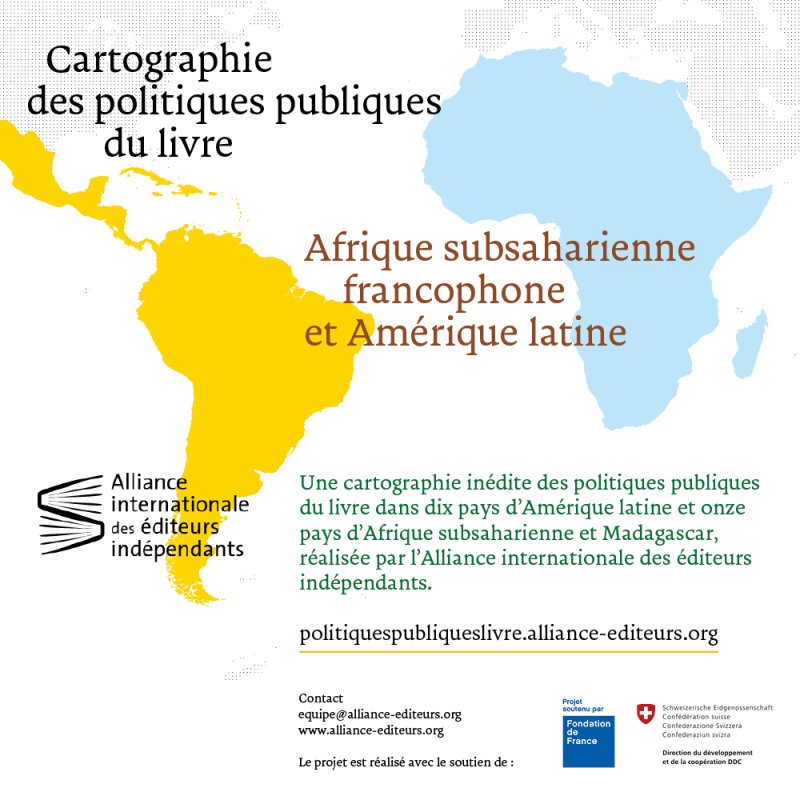
An unprecedented mapping of policies supporting reading and books in 22 countries, which can be consulted and downloaded online : publicbookpolicies.alliance-editeurs.org
The mapping proposes several items : one entry per country (country fact sheets listing existing mechanisms for public support for books at the national level) ; a regional entry (comparative data through cross-cutting analyses). It is interactive and evolving : the fact sheets presenting the institutions and national public book policies can be amended and modified as the systems evolve. This mapping is thus intended to be extended to new countries in both regions, or even to integrate a new region in the long term (the Arab world in particular). For now, the mapping exists only in Spanish and French for lack of financial means to carry out a translation into English. The Alliance hopes to find the necessary funds to translate the mapping into English soon.
The objectives of the mapping are to :
• make available data on the public book policies of the respective countries ;
• offer an overview of public book policies, freely accessible, consultable and reusable by professionals and public authorities ;
• promote dialogue and exchanges between public authorities and publishers ;
• develop advocacy tools for independent publishers ;
• contribute to the establishment and consolidation of public book policies in developing countries (among others, for a greater circulation of books and ideas, for the appropriation of digital tools by book professionals, for balanced exchanges between North and South) ;
• affirm the role of civil society (book professionals and particularly independent publishers) in the development and implementation of public book policies.
These 80 recommendations are built on the principles upheld in the 2014 International Declaration of independent publishers, an important document promoting bibliodiversity, signed on September 20th 2014, by more than 400 independent publishers from 45 countries.
They raise the necessary prerequisites, divided by themes, for the development, maintenance and strengthening of bibliodiversity in concerned countries. Some recommendations are accompanied by tools and projects (existing or to be developed in the context of the 2015-2016 Alliance programme of activities), enabling a practical implementation of independent publishers’ proposals.
Contents of the 80 recommendations & tools in support of bibliodiversity :
* Public policies safeguarding bibliodiversity
* Proposals and actions supporting digital bibliodiversity
* The Amazon system, a threat to bibliodiversity ?
* Essential measures for publishing in local and national languages
* Methods for rethinking book donations
* Proposals and actions to develop solidarity publishing partnerships
* Activities to strengthen diversity in youth publishing
For all book actors to take ownership of these recommendations and tools, we invite you to contact us with your comments, suggestions, ideas, and proposals that could enhance and strengthen this document.
Contact the Alliance team to get a free digital version of this issue dedicated to public book policies.
Publication : June 2019
The Bibliodiversité review is copublished by Double ponctuation and the International Alliance of independent publishers.
See other issues of Bibliodiversité review here : “Self-publishing” ; “Committed publishing”…
Overview of the issue :
From censorship to safeguarding, public initiatives in the book sector are varied.
This issue proposes academic articles, professional’ views and two previously unpublished regional analyses (sub-Saharan Africa and Spanish-speaking Latin America), taking us from Russia to Switzerland, via Syria, Lebanon, Tunisia, Morocco, Quebec, France and Argentina.
All contributions seek an answer to this question : does the intervention of public authorities support editorial diversity ?
Contents of the ‘Public book policies issue’ :
“Introduction : action taken by public authorities to support books”, by Étienne Galliand, Editor-in-Chief of Bibliodiversity Journal
“Federalism and cohesion – New book policies in Switzerland”, by Carine Corajoud, historian (Switzerland)
“A relative autonomy – A comparative analysis of the room for manoeuvre
in public publishing in France”, by Hélène Seiler-Juilleret, École des hautes études en sciences sociales (Higher School of Social Sciences, France)
“Negotiating control, promoting reading – Independent publishers and the Russian State in the 2010s”, by Bella Ostromooukhova, Paris Sorbonne University (France and Russia)
“Morocco : escheated books – The shortcomings in state involvement in the books and written word sector”, by Anouk Cohen, CNRS (France and Morocco) and Kenza Sefrioui, Ph.D. in comparative literature, literary critic and publisher (Morocco)
“Government policy on books in Tunisia” – A publisher’s view, by Nouri Abid, Med Ali publishers (Tunisia)
“Government policy on books in Syria” – A publisher’s view, by Samar Haddad, Atlas Publishing (Syria)
“Government policy on books in Lebanon” – A bookseller’s view, by Michel Choueiri, bookseller (France and the United Arab Emirates)
“Government policy on books in sub-Saharan Africa and Madagascar. A cross-sectional analysis of data collected in 12 countries”, by Luc Pinhas, University of Paris 13 Villetaneuse (France)
“Publishing and public authorities : the Quebec case – Or the influence of public action on editorial independence ?”, by Pascal Genêt, Sherbrooke University (Quebec-Canada)
“Laws, public policies, institutions and measures to support books and reading
in Latin America – An analysis of data gathered in 10 countries”, by Andrés E. Fernández Vergara (University of Chile)
“From culture towards business – An analysis of a state support programme
for local publishing in Buenos Aires : Opción Libros”, by José de Souza Muniz Jr., Federal Centre for Technological Education, Minas Gerais (Brazil)
Round-table discussion #3 « What to say and where to say it ? » with Gisèle Sapiro (sociologist, France), Ronny Agustinus (publisher, Marjin Kiri, Indonesia), Ibrahima Aya (publisher, Éditions Tombouctou, Mali), moderated by Paulo Slachevsky (publisher, Lom Ediciones, Chile).
The logics of concentration in the publishing world and the domination of the commercial aspect of the book to the detriment of its cultural aspect are mixed with other conservative impulses that have an impact on the sector, such as cultural colonialism, patriarchy, the marginalisation of minorities and peripheral languages... Reflecting on these relations of power and domination, reinforcing the liberating and transforming character of books and words is the invitation of this second morning of the International Conference of Independent Publishers.
Round-table discussion #4 « Women in the publishing world » with Samar Haddad (publisher, Atlas Publishing, Syria), Barbora Baronová (publisher, wo-men, Czech Republic), Julia Ortiz (publisher, Criatura Editora, Uruguay), Djaïli Amadou Amal (author, Cameroon), and moderated by Ana Gallego Cuiñas (Social and Cultural Anthropology, University of Granada, Spain).
While the publishing profession seems to be predominantly occupied by women in many countries –and although the situation is not identical in all cultural contexts and book markets– women remain under-represented in positions of responsibility within publishing houses, just as women authors are less recognised than men by literary prizes. Is this situation –this imbalance– which has been pointed out in Europe in particular, generalizable at the international level ? What does being a woman in the publishing world mean in concrete terms ? International independent publishing offers a diverse and varied panorama of the place and role accorded to women professionals in the sector. Whether they practice their profession in Syria, the Czech Republic, Cameroon or Canada, whether they are authors, publishers or feminist publishers, this round table will amplify the voices of women book professionals who contribute to shaping the international publishing landscape.
International Conference of Independent Publishers, Pamplona-Iruñea, November 24, 2021
Young democracies are fragile. How are Eastern European publishing houses fighting against the danger, ideology, hybrid war, propaganda, fake news and violence of the hegemonic forces within the post-communist space and times ? What are the strategies of Ukrainian publishers to empower themselves in the war ? How is Slovakian culture dealing with the incompetent and risky behaviour of several of its leaders ? What are Bulgarian publishers most scared of within their practice ? How can we inspire each other in our coping strategies ? Are local writers able to become again strong voices of their society and change the political heading ? What are the strategies of Eastern European publishing houses to place their work in the global book market ? And what are the main subjects from the post-communist regions that have the potential to enrich the global culture, narrative and storytelling ?
Speakers :
Antoinette Koleva (KX - Critique and Humanism Publishing House, Bulgaria)
Slava Svitova (Creative Women Publishing, Ukraine)
František Malík (BRaK, Slovakia)
Moderated by Barbora Baronová (wo-men, Czech Republic)
At a time when the far right is gaining ground in many countries, when a wind of authoritarianism, conservatism and extremism is spreading, when ultra-capitalist (or ultra-liberal) models are at work, many fundamental freedoms are being called into question. The book industry (and independent publishing in particular) is no exception. What are the consequences of these political, societal and economic shifts for the freedom to write, publish and read ? How are authors, publishers, booksellers and librarians around the world affected by this crumbling of democracy and freedom ? What are the mechanisms for circumventing these attacks on freedoms, the alternatives that have been put in place and the hopes held out by book professionals ?
Speakers :
Romana Cacchioli (Director of PEN International)
Gvantsa Jobava (President of the International Publishers Association)
Maia Simonishvili (Parliamentary National Library of Georgia, member of the IFLA European Regional Committee and the FAIFE Advisory Committee)
Moderated by Kenza Sefrioui (En toutes lettres, Morocco)
In just this past month, three prominent Iranian writers, translators, and members of the Association of Iranian Writers, Bektash Abtin, Kayvan Bazhan, and Reza Khandan Mahabadi, and journalist and sociology researcher, Khosrow Sadeghi Boroujeni, have been sentenced to prison on charges of “propaganda against the Islamic Republic of Iran, and gathering and collusion with the intent of acting against national security.”
These accusations, which have led to long prison sentences and the charges levied are false. Their objectives are to further oppress writers and the people of Iran.
At a time when the world is under crisis by the pandemic, Iran, and especially within its prisons has a very unstable environment, with the increasing spread of Coronavirus among inmates.
We as authors and scholars would like to ask you to let the voices of our fellow authors in prison be heard by the people of the world and to demand their immediate release.
Daryoush Ashouri, Author, Translator and the Co-founder of the Association of Iranian Writers
Ervand Abrahamian, Author and Professor Emeritus, City University of New York
Azar Nafisi, Author
Faraj Sarkohi, Writer, Journalist, Literature Critic ; A Member of German Pen ; The Recipient of Kurt-Tucholsky-prize ; World Association of Newspapers’ Golden Pen of Freedom Award and World Press Freedom
Hero by International Press Institute
Akram Pedramnia, Author, Translator ; A Member of Pen Canada ; the Recipient of James Joyce Foundation Scholar
Moniro Ravanipour, Author
Mohsen Yalfani, Author and Translator
Nasim Khaksar, Author and Critic
Reza Allamehzadeh, Moviemaker and Writer
Morad Farhadpour, Author, Translator and Critical Theorist
Akbar Masoumbaigi, Author, Translator and a Member of the Association of Iranian Writers
Babak Ahmadi, Author, Translator and Philosophy Researcher
Peyman Vahabzadeh, Author and Professor, University of Victoria
Sohrab Behdad, Denison University, USA
Farshin Kazeminia, Pierre and Marie Curie University (Paris 6)
Amir Kianpour, PhD Candidate, University of Paris 8 Vincennes-Saint-Denis
Mehran Mostafavi, Sacly University (Paris), Professor
Iman Ganji, PhD in Art Philosophy and Philosophy Researcher, Free University of Berlin
Mehrdad Darvishpour, Senior Lecturer and Associate Professor, Sociologist, Mälardalen University
Farhad Nomani, Professor Emeritus of Economics, The American University of Paris
Soheil Asefi, Journalist and PhD student in History, The Graduate Center, The City University of New York (CUNY)
Saeed Hariri, Moderator, Toronto Book Club
Azadeh Parsapour, Translator, Editor and Publisher
Arash Kia, Faculty of Institute for Healthcare Delivery Science, Icahn School of Medicine at Mount Sinai, New York
We believe that the charges against him under Section 57 of the ICT are an attempt to intimidate him by using a draconian law to stifle his right to free speech. He has been held without due legal process, and we have received disturbing reports of brutal treatment meted out to him in detention.
The right of peaceful protest, and the defence of that right, are fundamental to democracy and to upholding the rule of law. The IAIP extends its support to, and expresses solidarity with, Shahidul Alam, and reiterates its commitment to the freedom of expression in Bangladesh as well as in the rest of the world.
An unprecedented study to be published in July 2020, initiated and coordinated by the Alliance !
A sociological survey conducted by Anne-Marie Voisard, Quebec researcher (MA on strategic lawsuits against public participation and legal repression of freedom of speech from the University of Montréal) and written by Philippe Chibani-Jacquot ; a historical introduction by Jean-Yves Mollier, French historian.
Since the creation of the Alliance, publishers – custodians of freedom of speech alongside journalists, authors, bloggers, booksellers, artists… – have been the whistleblowers on instances of censorship occurring in some countries. Over the past few years, we have noticed some new forms of attack on freedom of speech. In several contexts, pressures and limitations exercised on public speech are increasing. After the wave of freedom expected during the revolutions in the Arab world, the series of attacks in Africa, Europe, and in the Arab world, destabilised freedom of speech : a loss of sense, of bearings that brings us to question spaces of freedom, the reach of words and the power of the medium.
The freedom of publishing is a “category” of freedom of speech that can take different forms through various supports. The freedom of publishing pertains to the liberty to choose an author, to select or commission manuscripts, publish them, disseminate and distribute them, and put them on the market – all these activities are at the heart of publishers’ work. The threats to the freedom of publishing are precisely what the Alliance seeks to examine in this study.
In different geopolitical contexts, threatened by different forms of censorship, the Alliance’s independent publishers are committed to circulate texts and ideas, to amplify voices, even if sometimes they are in minority, to participate in building critical thinking and emancipation. It is their responsibility, both professional and civic.
Read here the presentation of the study, of the authors, the methodology...
Publishers from the Alliance condemn the banning of the book El desarme, la vía vasca d’Iñaki Egaña (copublished by Txalaparta, Gara journal, and Mediabask media), during its promotion on Basque radio-television.
The Alliance aims to produce an unprecedented study about freedom of publishing, listening to independent publishers about the following questions :
• What are the different infringements of freedom of publishing that independent publishers confront in their countries ?
• How do they face these threats in their daily professional life ?
• How do the publishers resist, preserve, and defend their freedom of publishing ? How do they circumvent censorship ?
• Are publishers more vulnerable today than they used to be ? Have there been some significant changes in recent years ?
• From the point of view of the publishers, is there a limit to freedom of publishing (and freedom of expression) ?
The study will be written in French. If you are interested in conducting this study, please send your proposal to the Alliance team before 13 March 2017.}
The International Alliance of independent publishers demands that Turkish authorities immediately release publishers, authors and journalists currently detained. It is necessary to guarantee freedom of speech and publishing in Turkey. The Alliance joins the Turkish Publishers Association’s condemnation of the summary closure of publishing houses and media as a clear human rights violation, and urges the Turkish authorities to rescind those summary closures.
Extract from the Communiqué by the Alliance for a call for freedom of speech and publishing in Bangladesh, 10 November 2015 :
For several months, authors, bloggers, publishers and booksellers have been the victims of violent and deadly attacks in Bangladesh.
The International Alliance of independent publishers, representing 400 independent publishers from 45 countries in the world, condemns these murderous attacks and assault on freedom of speech and publishing. The Alliance also reaffirms the essential role needing to be played by public authorities, in Bangladesh and throughout the world to enable the emancipation of its citizens, and to guarantee a public space conducive to dialogue and peace. Plurality and diversity of ideas constitute the foundation of democracy. It is urgent that the Bangladeshi government protects and supports actors in the book industry, thus safeguarding the foundations necessary for their work and freedom of speech.
The objectives of this guide are to :
• suggest lines of approach and actions for publishers who are members of the International Alliance of Independent Publishers, and to book professionals more broadly ;
• help implement and put into practice the principles and values defended by the Alliance’s members ;
• illustrate these principles using examples (experience, projects, ideas, etc. from professionals) which may serve as sources of inspiration.
How ?
The “entries” in this Guide are thematic. Given that the intention of the Guide is to present in a practical way the principles of the Pamplona-Iruñea Declaration, the main entries are currently as follows :
• decolonial publishing
• ecological publishing
• feminist and LGBTQI+ publishing
• free publishing
• social publishing
• solidarity-based publishing
This Guide will evolve ; its form is not fixed. Indeed, several of the Guide’s entries require input that will come from the work of the thematic working groups which will be tasked with making suggestions and enhancing these entries. It will then be possible to update and adapt the Guide over time in line with the evolution of practices and ideas inside the Alliance (in particular through post-conference thematic working groups).
Prerequisite
The Alliance is a unique intercultural network, whose specificity and strength lie in respect for diversity.
Kindness, curiosity, listening and respect for points of view, as well as equal opportunities for speech, must be the basis of every exchange within the Alliance. There can be no place for hate speech or non-inclusive discourse, which would be against the fundamental principles of the Alliance.
This prerequisite is the basis on which the Alliance’s members organise themselves and work together – on the creation of this Guide, among other things.
Warning
The Guide to Good Practice is intended as food for thought and discussion. It cannot commit the publishers who are members of the Alliance to all the proposals and recommendations it contains. Indeed, the International Alliance of Independent Publishers is aware of the geographical diversity of its members and, consequently, of their cultural diversity. It is also fully aware of the impossibility of implementing certain measures (e.g. on book ecology, etc.) in some countries for many reasons related to the political, social, economic, cultural environment…
The Independent Publishing Glossary is a collective project led by publishers from the Spanish-language network of the International Alliance of Independent Publishers.
It shows the meanings and definitions of words commonly used in publishing. It is an evolving project, which will be enriched over time in order to include new concepts and to take into account other proposal for definitions. The idea is not to freeze or petrify the concepts, but to open them up to enhance their multiple meanings.
Each term is signed by the person who worked on the definition. The glossary was edited by Germán Gacio Baquiola (Corredor Sur Editorial, Ecuador / Colectivo Editores independientes de Ecuador), Teresa Gottlieb, (Editorial Maitri, Chile), Paulo Slachevsky (Lom Ediciones, Chile) and Miguel Villafuerte, (Editorial Blanca, Ecuador).
“Now that we have entered the 21st century, it is difficult to dissociate the end from the means : what to say, and where to say it ? Thus, we find that many authors seeking to promote debate, creativity and critical thinking, justice and equality are published by large conglomerates with multiple editorial labels. Isn’t the transformative power of these works reduced to nothing when they plunge into the workings of the entertainment industry ? It is a fact that transnational corporations, whatever their field of action, are the very expression of the system that dominates us. By choosing them as publishers, do we not somehow leave the world of transformative ideas in the hands of those who lay the foundations of the model we criticise ? Doesn’t that strengthen the control of big capital over the word and our daily lives ? Moreover, how can we not question the cross-industry investment of the business groups that own publishing houses ? And, are these investments neutral ?”
In this open letter, independent publishers invite all the actors of the book industry to reflect with them on their practices and the impacts that result from them. In particular, they call on authors, academics and intellectuals to work on projects whose vocation is to transform the order of things and not to consolidate the status quo, to publish their works in independent publishing houses in their own countries, and to give preference to independent publishing houses when it comes to transferring foreign and translation rights.
As the world suffers the health, social and economic consequences of the pandemic, book ecosystems and independent publishing houses are further weakened and, for some, are trying to survive. If solidarity between creators and book professionals is one of the foundations of bibliodiversity, this solidarity is vital in the current context.
These 80 recommendations are built on the principles upheld in the 2014 International Declaration of independent publishers, an important document promoting bibliodiversity, signed on September 20th 2014, by more than 400 independent publishers from 45 countries.
They raise the necessary prerequisites, divided by themes, for the development, maintenance and strengthening of bibliodiversity in concerned countries. Some recommendations are accompanied by tools and projects (existing or to be developed in the context of the 2015-2016 Alliance programme of activities), enabling a practical implementation of independent publishers’ proposals.
Contents of the 80 recommendations & tools in support of bibliodiversity :
* Public policies safeguarding bibliodiversity
* Proposals and actions supporting digital bibliodiversity
* The Amazon system, a threat to bibliodiversity ?
* Essential measures for publishing in local and national languages
* Methods for rethinking book donations
* Proposals and actions to develop solidarity publishing partnerships
* Activities to strengthen diversity in youth publishing
For all book actors to take ownership of these recommendations and tools, we invite you to contact us with your comments, suggestions, ideas, and proposals that could enhance and strengthen this document.
Re|Shaping Cultural Policies 2018 (UNESCO 2005 Convention Global Report)
Creativity at the Heart of Development
Excerpt from the foreword :
“This new UNESCO Global Report ‘Re|Shaping Cultural Policies’ is an invaluable tool for the implementation of the 2005 Convention on the Protection and Promotion of the Diversity of Cultural Expressions. This Convention, now ratified by 146 Parties, including the European Union, is leading UNESCO’s efforts to strengthen capacities for the creation, production, and dissemination of cultural goods, services, and activities. States are supported in their sovereign right to implement public policies for the development of strong and dynamic cultural and creative industry sectors. UNESCO is committed to developing more effective and sustainable public policies in these areas.
Our roadmap is clear and requires the cooperation of governments and non-governmental actors in four key areas : strengthening governance for culture, improving the conditions for the mobility of artists, integrating culture in sustainable development strategies, and promoting human rights and fundamental freedoms. These four goals are closely linked to the 2030 Agenda for Sustainable Development.”
The socio-economic environment, historical approach and political context are only some of the factors to consider in appreciating, in all its complexity and diversity, the notion of an independent publisher. Independent publishers in Chile, France, Benin, Lebanon, or India work in specific contexts that have direct consequences on their activities. However, although the situation differs from one country to another, it is possible to agree on some criteria in order to define what is an independent publisher. Independent publishers develop their editorial policy freely, autonomously, and without external interference. They are not the mouthpieces for a political party, religion, institution, communication group, or company. The structure of capital and the shareholders identity also affect their independence : the takeover of publishing houses by big companies not linked to publishing and implementation of profit-driven policies often result in a loss of independence and a shift in publishing orientation. Independent publishers, as defined by the Alliance’s publishers, are originating publishers : through their often-innovative publishing choices, freedom of speech, publishing and financial risk-taking, they participate in discussions, distribution, and development of their readers’ critical thinking. In this regard, they are key players in bibliodiversity.
Bibliodiversity is cultural diversity applied to the world of books. Echoing biodiversity, it refers to the critical diversity of products (books, scripts, eBooks, apps, and oral literature) made available to readers. Bibliodiversity is a complex, self-sustaining system of storytelling, writing, publishing, and other kinds of production of oral and written literature. The writers and producers are comparable to the inhabitants of an ecosystem. Bibliodiversity contributes to a thriving life of culture and a healthy eco-social system. While large publishers do contribute to publishing diversity through the quantitative importance of their production, it is not enough to guarantee bibliodiversity, which is not only measured by the number of titles available.
Independent publishers, even if they consider their publishing houses’ economic balance, are above all concerned with the content of published products. Independent publishers’ books bring a different outlook and voice, as opposed to the more standardised publications offered by major groups. Independent publishers’ books and other products and their preferred diffusion channels (independent booksellers, among others) are therefore essential to preserve and strengthen plurality and the diffusion of ideas. The word bibliodiversity was invented by Chilean publishers, during the creation of the “Editores independientes de Chile” collective in the late 1990s. The International Alliance of independent publishers significantly contributed to the diffusion and promotion of this notion in several languages, including through the Dakar Declaration (2003), Guadalajara Declaration (2005), Paris Declaration (2007), Cape Town Declaration (2014) and the Pamplona-Iruñea Declaration (2021). Since 2010, International Bibliodiversity Day is celebrated on 21 September.
Overview
Deep, slow and complex reading is disappearing in favour of more immediate reading. Images are popping up everywhere, as shown by the popularity of manga and comic books. Eclectic reading is being replaced by dedication to a specific genre. Time spent reading books is being reduced (or mixed) in favour of screen time. Audiobooks are making a remarkable breakthrough - but is it reading ?
Yet we are reading more than ever, at least online. Children’s literature is doing well. Close-knit communities flourish with reading recommendations. Instagram influencers are selling hundreds of copies, and the manga sections of bookshops are packed with teenagers.
Should we conclude from this that the (r)evolution of reading is above all characterised by a generational divide ? That image and sound represent the future of reading ? And how can we encourage people to read widely ? These are just some of the questions addressed in this publication.
All the responses to the international survey on the precariousness of independent publishers featured in this issue can be read in the PDF document opposite.
Presentation
Although independent publishing houses (with their authors) are at the heart of the creative process, they are the ones most vulnerable to insecurity. Publishers hold down several jobs in order to stay in business, earn little or nothing, are caught up in a book market that encourages overproduction, and are under-represented and under-defended.
Independent publishing is becoming increasingly precarious. And yet its contribution to bibliodiversity is well-known. Genuine “venture capitalists”, independent publishers spot the talents of tomorrow and give a voice to minorities - much more so than other publishing structures. They play an important role in the intellectual, artistic and democratic life of a country.
How can we better support independent publishing and the talent it represents ? In addition to their questions, analyses and personal accounts, the contributors to this innovative issue put forward a series of proposals to combat the precariousness of independent publishing.
Presentation
Many independent publishers and bookshops are faced with the question of the transmission of their businesses, and sometimes struggle to find someone to take them on. This not only impacts the individuals concerned. Given the extent to which, as a generation leaves the world of work, the phenomenon is gaining momentum in Europe as well as Latin America and Africa, the future of a certain idea of the book is also at stake.
But is transmission necessary ? And if yes, to who, when and how ? Are there differences between the transmission of a publishing house or bookshop and that of other businesses ? In a sector undergoing great change, the giving up of a business in the book industry poses a broader question about the capacity for renewal of cultural organisations – of their people, practices and content – but also about the integration of legislative, societal and technological changes.
Here, a collection of texts tackles from different points of view this essential yet under-studied subject. More than a practical guide – something it appears it would be difficult to write, given the variety of situations encountered – in this issue we seek above all to share academic analyses and accounts of experiences to help us reflect on the notion of renewal and think about these transmissions.
Presentation
The world of books and writing is not necessarily diverse. Like all places of power, whether real or symbolic, it does not escape the forms of exclusion and predation that can be observed elsewhere in society.
By deliberately favouring a plurality of approaches to the question of inclusion, this issue of the journal attempts to explore a multidimensional phenomenon. Thus, whether through feminism, indigenousness, the LGBTQ+ movement or by considering those excluded from the written word, the authors question the inclusive capacity of this sector.
Beyond the observations, they propose practical examples (collected in France, Quebec, Belgium, Spain, India...) to promote inclusion : the establishment of a gender editor within an editorial office, the creation of a native publishing house, the management of bookshops, publishing houses or feminist or gay journals, the reflection of librarians on the conditions of reception of minorities, etc.
Little by little, thanks to these many initiatives, often without wanting to polemicise or to whitewash issues, professionals are fighting discrimination daily and promoting the expression of real diversity.
“Bibliodiversité” is co-published by Double ponctuation and the International Alliance of Independent Publishers.
Presentation
At a time when environmental concerns are becoming more and more important and when traditional production patterns are increasingly being questioned, is there such a thing as an ecological, responsible and solidarity book ?
At a time when a significant proportion of printed books end up unread and when the physical flow of books generates significant greenhouse gas emissions, printers, publishers, booksellers and distributors are questioning their practices and the impact they have.
They are proposing alternatives to the dominant system to respond to these challenges – and thus define the future of the book ?
Presentation
More than half of the languages spoken in the world are in danger of disappearing ; if nothing is done, UNESCO estimates that 90% of languages will have disappeared in the course of this century. Languages are an essential part of a people’s culture, yet they are much more than just a tool for communication ; they offer a unique view of the world and of the people who live in it. What can the publishing sector do – and is already doing – to help preserve and sustain these minority languages ? This book attempts to answer this question through academic articles and testimonies of book professionals who, together, propose a novel approach to the subject.
In the light of their publications, the book analyses the situation of several minority languages - Haitian Creole, Corsican, Innu, Yiddish, Kikuyu, Basque, Malagasy, Náhuatl, etc. and shows that solutions are possible when the actors in the book system are mobilised.
Summary :
Publishing in minority languages – On diversity of publishing languages in a
globalized context / by Nathalie Carré (Inalco, France) and Raphaël Thierry
(independent researcher, France)
Creole publishing in Haiti – Obstacles, initiatives and development prospects /
by Sandie Blaise, Duke University (United States)
The spread of Yiddish poetry in German speaking world – The case of bilingual editions / by Caroline Puaud, Paris Sorbonne University
Write and publish in Madagascar – How to reach the world ? / by Dominique Ranaivoson, University of Lorraine (France)
Make minority languages dialogue (online) – The example of intergenerational collaboration in East Africa / by Pierre Boizette, Paris-Nanterre University (France)
Normativity, diversity and dynamics of creation in the contemporary Basque literary field – Study of its operating trends through the literary trajectory of Eñaut Etxamendi / by Itziar Madina Elguezabal, Bordeaux-Montaigne Doctoral school (France)
Locate, catalog, make visible – The place of minority languages in collections of the University Library for Languages and Civilizations Studies (BULAC) / Interview with Marine Defosse, Soline Lau-Suchet and Nicolas Pitsos, librarians at BULAC (France)
“As long as the language circulates, we will have books to produce” / interview with Bernard Biancarelli (Albiana Publishing, Corsica/France)
“Publishing must grow the world” – Mémoire d’encrier and the languages of the world / interview with Rodney Saint-Éloi, Mémoire d’Encrier Publishing (Quebec / Canada)
“Saving a language is a task for all of us” / by María Yolanda Argüello Mendoza, Magenta editions (Mexico)
Public book and reading policies for indigenous languages in Chile. Intervention (updated in 2020) in the Parliament of Books and Speech / by Paulo Slachevsky, Lom Ediciones (Chile)
Save, transmit – An example of transcription-translation from oral literature
of some Vietnam’s peoples / by Mireille Gansel, translator, writer
PEN’s commitment to Linguistic Rights – The importance of writing, publishing and reading in marginalized languages / interview with Peter McDonald (University of Oxford) and Carles Torner (PEN International), July 2018, Oxford and London
Contact the Alliance team to get a free digital version of this issue dedicated to public book policies.
Publication : June 2019
The Bibliodiversité review is copublished by Double ponctuation and the International Alliance of independent publishers.
See other issues of Bibliodiversité review here : “Self-publishing” ; “Committed publishing”…
Overview of the issue :
From censorship to safeguarding, public initiatives in the book sector are varied.
This issue proposes academic articles, professional’ views and two previously unpublished regional analyses (sub-Saharan Africa and Spanish-speaking Latin America), taking us from Russia to Switzerland, via Syria, Lebanon, Tunisia, Morocco, Quebec, France and Argentina.
All contributions seek an answer to this question : does the intervention of public authorities support editorial diversity ?
Contents of the ‘Public book policies issue’ :
“Introduction : action taken by public authorities to support books”, by Étienne Galliand, Editor-in-Chief of Bibliodiversity Journal
“Federalism and cohesion – New book policies in Switzerland”, by Carine Corajoud, historian (Switzerland)
“A relative autonomy – A comparative analysis of the room for manoeuvre
in public publishing in France”, by Hélène Seiler-Juilleret, École des hautes études en sciences sociales (Higher School of Social Sciences, France)
“Negotiating control, promoting reading – Independent publishers and the Russian State in the 2010s”, by Bella Ostromooukhova, Paris Sorbonne University (France and Russia)
“Morocco : escheated books – The shortcomings in state involvement in the books and written word sector”, by Anouk Cohen, CNRS (France and Morocco) and Kenza Sefrioui, Ph.D. in comparative literature, literary critic and publisher (Morocco)
“Government policy on books in Tunisia” – A publisher’s view, by Nouri Abid, Med Ali publishers (Tunisia)
“Government policy on books in Syria” – A publisher’s view, by Samar Haddad, Atlas Publishing (Syria)
“Government policy on books in Lebanon” – A bookseller’s view, by Michel Choueiri, bookseller (France and the United Arab Emirates)
“Government policy on books in sub-Saharan Africa and Madagascar. A cross-sectional analysis of data collected in 12 countries”, by Luc Pinhas, University of Paris 13 Villetaneuse (France)
“Publishing and public authorities : the Quebec case – Or the influence of public action on editorial independence ?”, by Pascal Genêt, Sherbrooke University (Quebec-Canada)
“Laws, public policies, institutions and measures to support books and reading
in Latin America – An analysis of data gathered in 10 countries”, by Andrés E. Fernández Vergara (University of Chile)
“From culture towards business – An analysis of a state support programme
for local publishing in Buenos Aires : Opción Libros”, by José de Souza Muniz Jr., Federal Centre for Technological Education, Minas Gerais (Brazil)
Abstract of the issue :
Self-publishing is less and less perceived as an egocentric, narcissistic act – perhaps even spiteful. Bypassing the selective function of a third party (the publisher) in favour of a direct relationship with the potential reader - whether by choice or by necessity, when one has been rejected by those “in the know”- seems on the contrary perfectly in tune with the signs of our times, which advocates for transversal relations, fewer intermediaries and direct relationships between producers and consumers, quicker channels, wariness towards experts, elites and comitology.
If self-publishing is uninhibited, it is vibrant in its digital format, where entry requirements are now minor. However, is self-publishing a vector of bibliodiversity ?
The notion of “independence” is also questioned by this development in terms of production. Indeed, the United States has often spoken of “indie” authors or ebooks, this figure of the independent author being now also assimilated and claimed in the French context. But what kind of independence are we talking about ?
Contents of “Self-publishing” :
Self-publishing : a vector of bibliodiversity ? / By Sylvie Bosser, University of Paris 8
Self-publishing in French literature. A historical overview of a multidimensional publishing practice / By Olivier Bessard-Banquy, University of Bordeaux-Montaigne
Self-published authors on Amazon’s Kindle Direct Publishing. Motivations, identities, practices and expectations / By Stéphanie Parmentier, University of Bordeaux-Montaigne
Self-publishing of comics. A specific route into publishing / By Kevin Le Bruchec, University of Paris 13
The (in)visible third party. Mentoring emerging writers : a process that encourages self-publishing / By Marie Caffari and Johanne Mohs, Berne University of the Arts
Self-publishing : a unique phenomenon by its nature, scope and actors. Analysis of self-publishing in Latin America and beyond / By Daniel Benchimol, for the CERLALC
Literary self-publishing in Morocco. Conditions, challenges and social significations of an growing cultural practice / By Kaoutar Harchi, Centre for Research on Social Links
Self-publishing in Iran. A story of a dilemma against a backdrop of audacity / Case study of Azadeh Parsapour, publisher
Les Éditions du Net. An interview with Henri Mojon / By Sylvie Bosser, University of Paris 8